We have seen that the web is an open space, to which anyone can technically contribute.
It is a decentralized space, with supposedly egalitarian power dynamics;
It is an open space, in principle accessible to everyone*;
It is a space of sharing, designed to consume and produce content produced by its users.
* One still had to have the technical skills and material access to the necessary tools.
1993: The web opens to the general public
CERN releases the W3 technology into the public domain in 1993, officially opening the web to the general public.
The web will not stop growing thereafter: from 23,000 sites in 1995, it had passed one billion by 2014.
A space apart
Invested from its beginnings by technophiles (but also artists), the web was in its early days a space that escaped the structures of media control — and did so until the end of the 1990s.
The Declaration of the Independence of Cyberspace
In 1996, John Perry Barlow published the Declaration of the Independence of Cyberspace, a text defending the idea of a virtual space, free and independent from governments and earthly laws.
The text was written in Davos, at the World Economic Forum, in direct reaction to Bill Clinton’s signing of the Telecommunications Act, which introduced for the first time in the United States a mechanism for regulating online content.
Chapter 1
Ideas that pre-existed the web
We need to go back in time a little to understand that the ideas defended by Barlow did not originate with the web. In reality, he is extending political ideas that had already been developing since the 1960s.
The political effervescence of the 1960s
In the 1960s, many political and counter-cultural movements form around questions of civil rights, anti-militarist struggles, and social equality.
May 68 poster
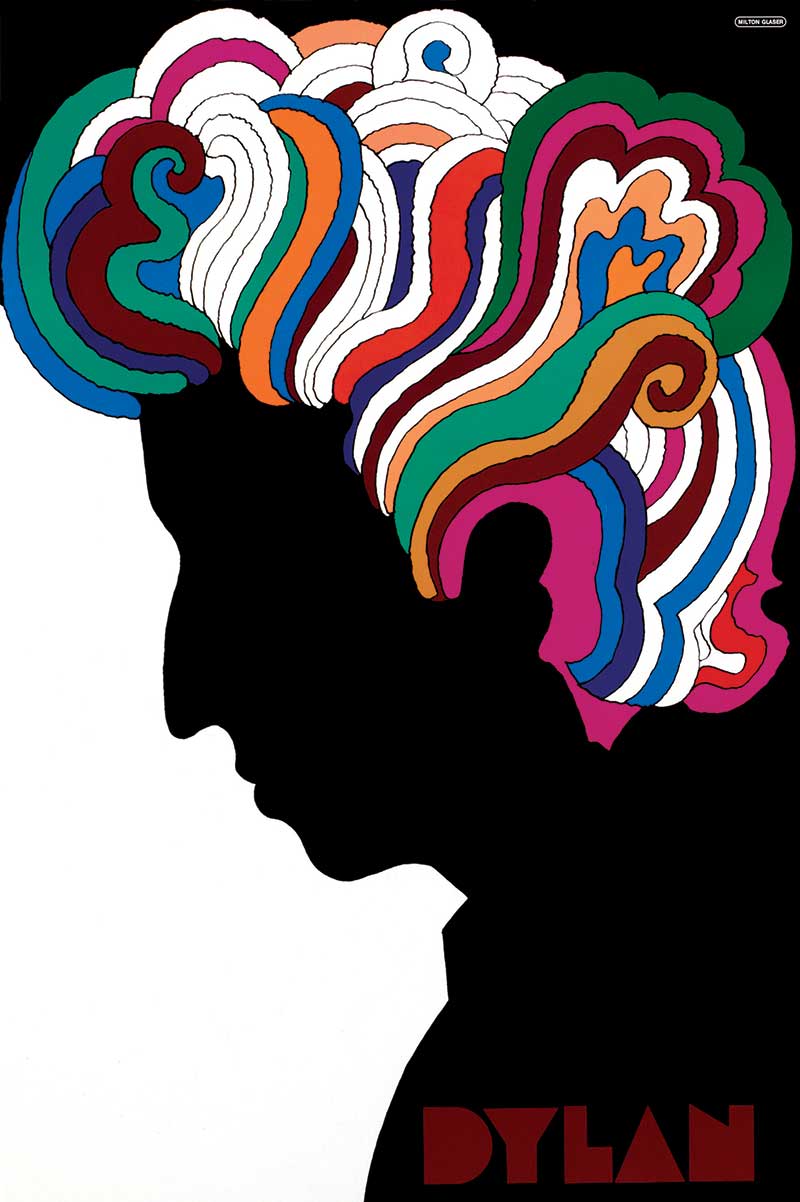
It is in these years that counter-cultural movements are constructed, such as the hippies, who criticize consumer society through an alternative way of life.
Milton Glaser, 'Dylan', 1966
This is also when Cultural Studies enter the campuses, contributing to the diffusion of critical concepts about society and culture — cultural hegemony, modes of resistance, the study of subcultures.
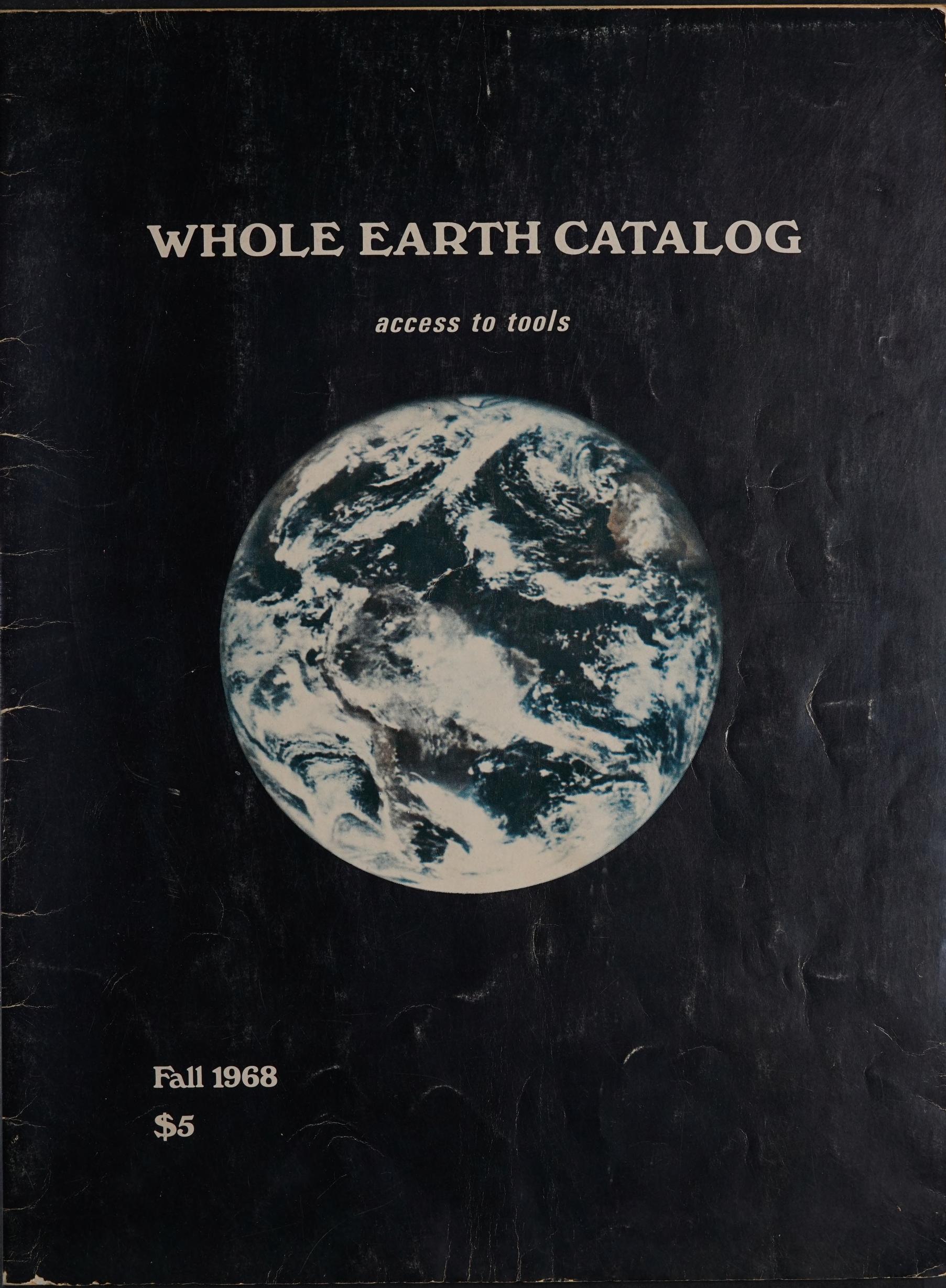
Whole Earth Catalog
An emblematic object of this era is this magazine published from 1968 onward and launched by Stewart Brand. Subtitled “access to tools”, it presents itself as a complete catalog of tools in the broadest sense: books, machines, ideas, resources — anything that can help one take back control of one’s own existence.
Cover of the Whole Earth Catalog, 1968
The promise of autonomy
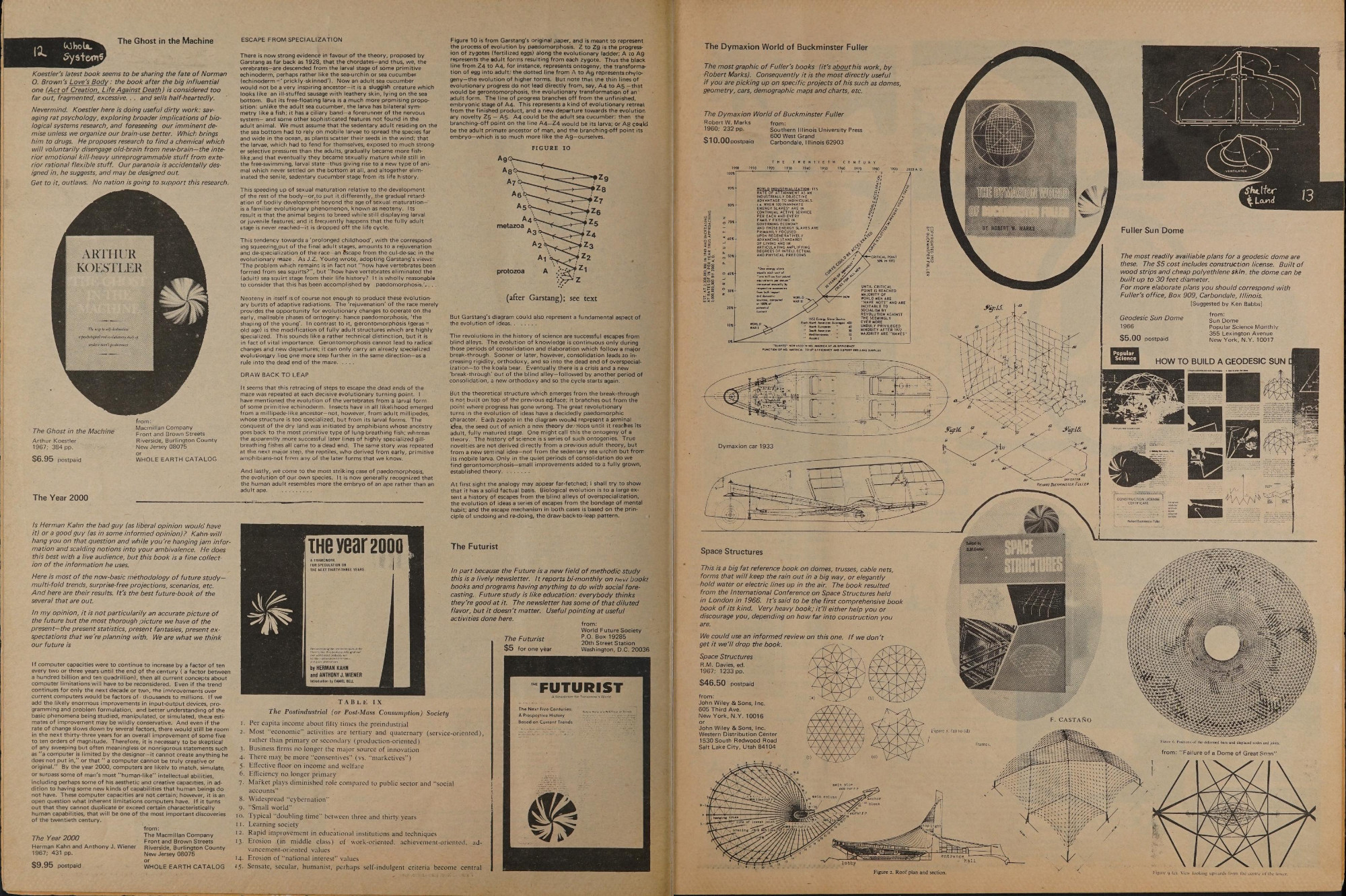
It carries a promise of autonomy from institutions (public, cultural, military, commercial), and invites interested people to form themselves into communities, motivated by a will toward technological independence.
Inside spread of the Whole Earth Catalog, 1968
But this aspiration carries within it a paradox that the later trajectory of Stewart Brand will bring to light…
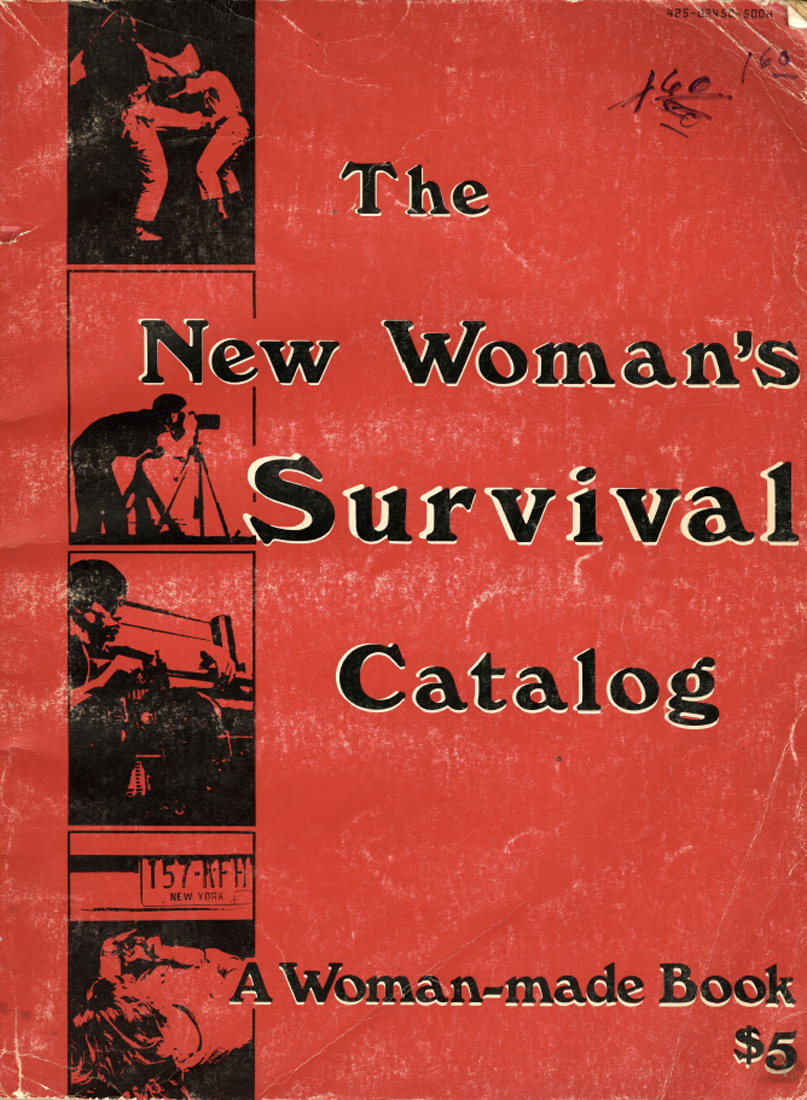
The New Woman’s Survival Catalog
This other publication, launched by Kirsten Grimstad and Susan Rennie in 1973, is a response to the blind spot of the Whole Earth, whose implicit audience was male and white.
K. Grimstad and S. Rennie, The New Woman's Survival Catalog, Coward, McCann & Geoghegan, 1973.
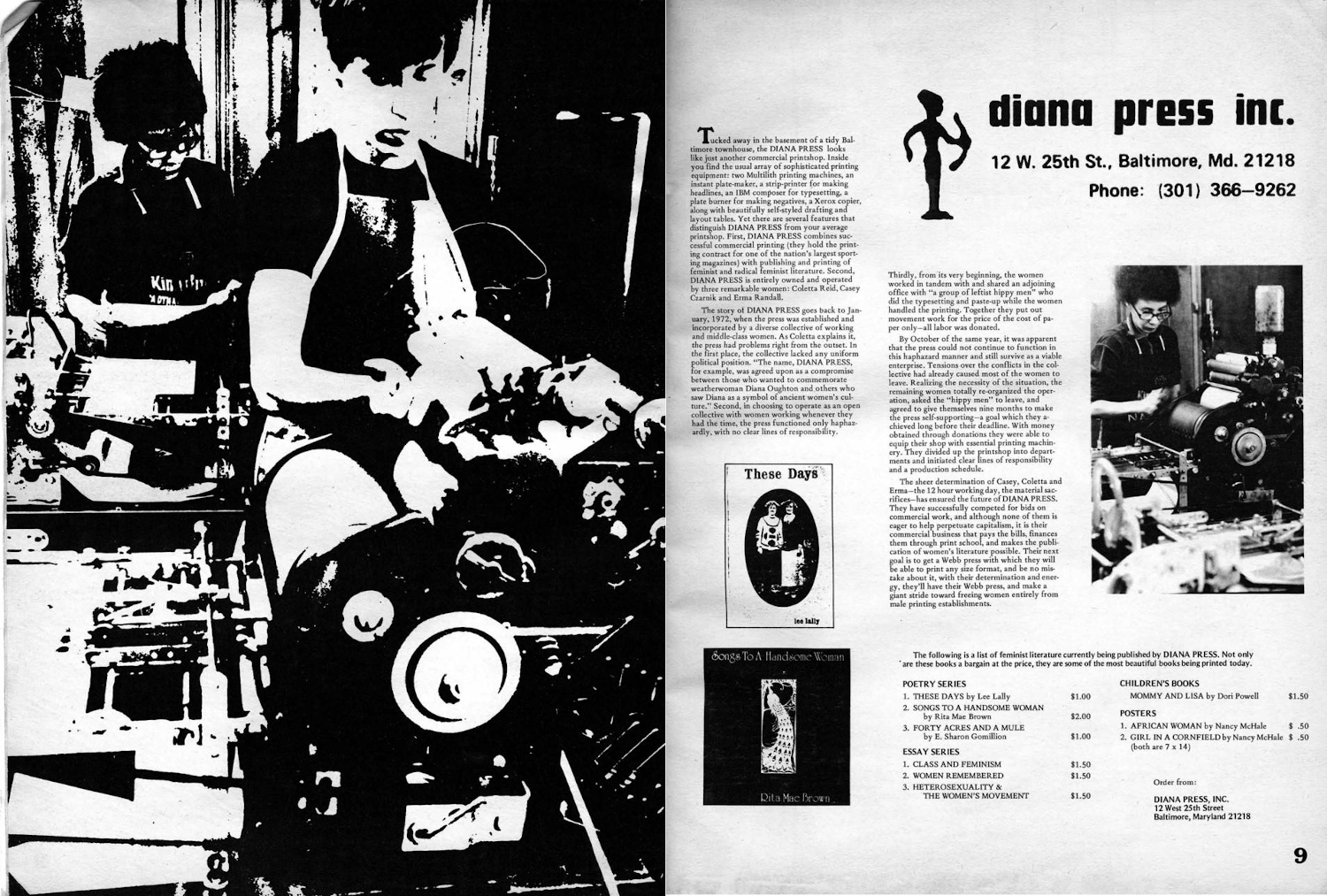
The New Woman’s Survival Catalog maps another territory — that of the feminist networks being built in parallel. They document feminist presses, women’s health centers, cooperatives, lesbian bookstores, and self-defense collectives.
These publications show a desire — well before the internet and its technical possibilities — to build communities for sharing knowledge. The evolution of communication technologies will give a significant boost to these communities.
Chapter 2
Inhabiting the network
Even before the internet network existed, communities formed around emerging technologies in order to build connected, dematerialized societies.
From the very beginning, we oscillate between promises of emancipation and fears of control, between utopias of sharing and dystopias of surveillance.
Let us not forget that it was the military that first invested in computer networks. Although they can be a formidable means of connecting humanities, they are first and foremost a military apparatus, and can become a coercive tool in the hands of governments and corporations.
The phreakers
Starting at the end of the 1960s in the United States, enthusiasts discover that by emitting a precise 2600 hertz tone into the telephone handset, one can bypass operators’ billing systems. These are the phreakers — a contraction of phone and freak.
Beyond the fraud, phreaking raises a political question: who owns the infrastructure? Who controls this space?
The Codebreakers
Published in 1967, The Codebreakers by David Kahn is the first major scholarly history of cryptography.
The book is not a hacker manifesto, but by legitimizing cryptography as a field of study at a moment when it was almost monopolized by intelligence services, it prepares the intellectual ground on which, twenty years later, the cypherpunk movement will develop.
Homebrew Computer Club
In March 1975, about thirty enthusiasts gather in Gordon French’s garage in California. Their aim: to share plans, hacks, and snippets of code in order to learn and create together.
The Homebrew Computer Club embodies a fleeting moment: the personal computer is not yet quite a mass-market product. It is built by and for tinkerers, before becoming a commercializable product.
It is there, in April 1976, that Steve Wozniak presents the computer that will become the Apple I.
Community Memory
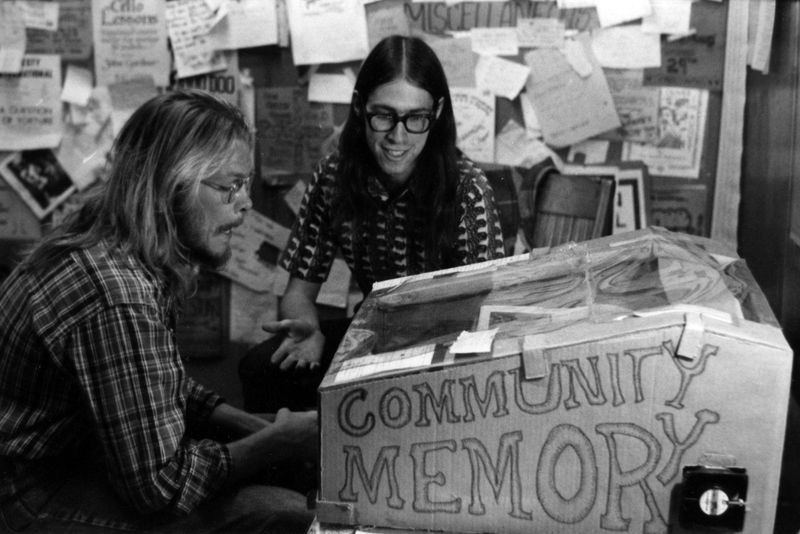
We already know this project, which allows anyone to type a message, index it by keywords (a prefiguration of hashtags), and search the common memory. Through this project, one experiences the possibilities of a “cyberspace” producing its own culture.
A Community Memory terminal installed at Leopold's Records, Berkeley
BBS and Usenet
In February 1978, Ward Christensen and Randy Suess imagine, during a blizzard in Chicago, a system for being able to communicate. The principle: a personal computer, a modem, a phone line, and software that allows others to call in to read and leave messages.
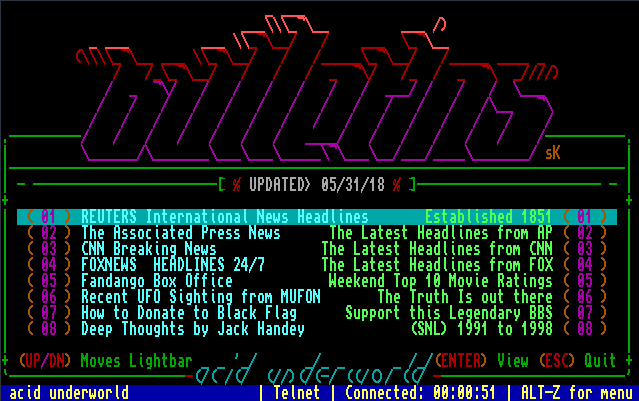
BBS interface
In the 1980s, thousands of BBS proliferate around the world, often operated by individuals from their bedrooms. Usenet, launched in 1980, adds another layer: a network of discussion groups that synchronize between servers.
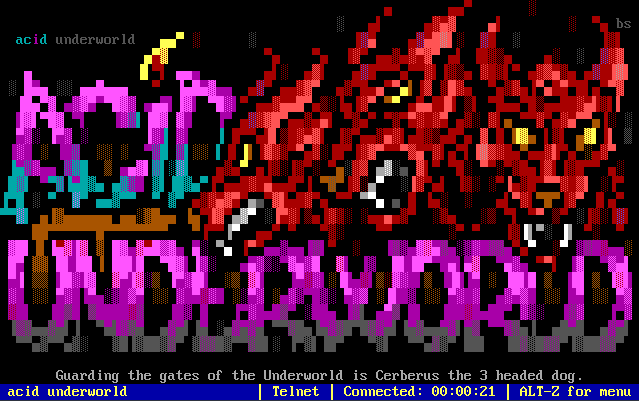
This community is important because it is composed of engaged people who came out of the counter-culture. The sharing of pirated software (the Warez scene) will be one of its hallmarks, alongside the demoscene, ASCII art, and the first online communities in the strong sense of the term.
It will be a space heavily invested by politicized communities, such as hackers and yippies.
ASCII art by the group Acid, born in the BBS scene
In 1985, Stewart Brand (whom we have already met) and Larry Brilliant launch the Whole Earth ‘Lectronic Link — WELL — over the BBS network.
Conceived as the digital extension of the Whole Earth Catalog, it allows information to be shared while building a community of knowledge.
Dissident voices
These projects oscillate between a utopian vision of a decentralized network, controlled by its users, and a pragmatic approach, aware of the potential grip of political and market powers over communications.
CLODO
Witness, for instance, the actions carried out by the Comité Liquidant Ou Détournant les Ordinateurs (CLODO — Committee Liquidating Or Subverting Computers) in the 1980s — whose members remained anonymous — and which claimed responsibility for around a dozen arson attacks on computing centers.
For this group, the computer is an instrument of profiling, control and exploitation. In this sense, they are the obverse of the positivist vision advocated by other groups.
'To fight against all forms of domination is our goal', one reads in their April 1980 communiqué.
As we have seen with the Declaration of the Independence of Cyberspace, the internet can become a space of collective emancipation — provided that it is preserved.
TAZ: Temporary Autonomous Zone
In 1991, Hakim Bey (pseudonym of Peter Lamborn Wilson) publishes TAZ — The Temporary Autonomous Zone.
He develops a principle of insurrectionary mobilization based on the creation of temporary, mobile zones governed by their own laws and rules.
Although he does not directly refer to them, this essay formalizes what was already happening in the BBS networks, will accompany the militant thinking of the web’s early years, and will indirectly inspire political movements such as the ZAD (Zones to Defend).
”Code is Law”
This phrase, from Lawrence Lessig, shows that many communities, concerned with preserving the space of freedom enabled by these communication networks, must move into action and understand the inner workings of the objects they handle.
Cypherpunks
“Cypherpunks write code.”
This group — whose name was coined by Jude Milhon (who took part in the Community Memory Project) — starts from a premise: in a surveillance society, encryption is the only practical guarantee of privacy. Rather than waiting for laws, one must produce tools.
From this movement and this culture will emerge projects such as Tor, BitTorrent, and later even Bitcoin.
The cyberpunk genre
We see cultural movements starting to propose structured visions of potential futures.
Born in the 1980s, the cyberpunk genre is an emblematic example: a future where technology has spread, but where power has concentrated in the hands of multinational corporations, where bodies are augmented without being liberated, where computing is a tool of control rather than liberation.
This movement is an important counterpoint to the Californian counter-culture, which sees in technology a promise of individual and collective emancipation.
Many of the actors we have encountered — cypherpunks, founders of the Electronic Frontier Foundation — cite Gibson.
Utopia meets pragmatism
While John Perry Barlow believes that a just cyberspace can be built collectively and intelligently, these younger generations are far more pragmatic and critical.
They see cyberspace as a space to be defended, because it is in permanent danger.
Techno-hippies vs Cyberpunks
These visions crystallize in the 1990s, in a debate that will leave its mark — between the early techno-hippies (John Perry Barlow, Stewart Brand, Lee Felsenstein) and the new generation of hackers and cyberpunks who, in an activist stance, use pseudonyms: Phiber Optik, Acid Phreak, Knight Lightning.
Thanks for the info!
In response to Barlow’s remark: “They seem to think that poorly secured systems deserve to be violated, and by extension that houses left open should be robbed. This arouses in me a strong disapproval, since I refuse, for philosophical reasons, to lock my house.”
Acid Phreak then asks him to give his address.
John Perry Barlow
Acid. My house is at 372 North Franklin Street. […] I own the last house before the prairie. The computer is always on. […] Are you really the little snoop who looks for easy places to break into? You disappoint me, kid.
Acid Phreak
Mr. Barlow, thank you for publishing all the information I need to obtain your banking data, and much more. Whose fault is it? MINE, for having retrieved it, or YOURS, for being so foolish?
Different visions, but not incompatible
A few days later, Phiber Optik reveals excerpts from Barlow’s credit records to demonstrate the truth of their claim.
Barlow takes a conciliatory tone, and privately exchanges with people he discovers to be congenial, driven above all by the desire to thumb their noses at the powerful bureaucracies — which had for some time been depicting hackers as shameless criminals.
Conclusion
”Don’t hate the media, be the media”
In 1999, a collective of activists, journalists and technicians puts online a site capable of receiving contributions directly from the public: photos, videos, testimonies, with no a priori editorial filter. This is the first Independent Media Center (IMC).
This project, called Indymedia, synthesizes and concludes the entire story we have just discovered: the internet is a space allowing the construction of an open and horizontal community, but it is also a space to be defended, one that can be invested by private and state interests.
It is one of the first mass-public incarnations of open publishing — a model that the commercial platforms of Web 2.0 (Facebook 2004, YouTube 2005, Twitter 2006) will take up and politically neutralize.
To be continued…
From GeoCities to Facebook: the centralization of the web