We have traced the history of the web — its utopian promises, its gradual centralisation, its interfaces designed to capture attention. We have also seen the practices that offer a critical perspective and propose new forms of engagement: Small Web, IndieWeb, Permacomputing, frugal web.
We have seen that the web is a tangible infrastructure, made of cables and data centres that store its content.
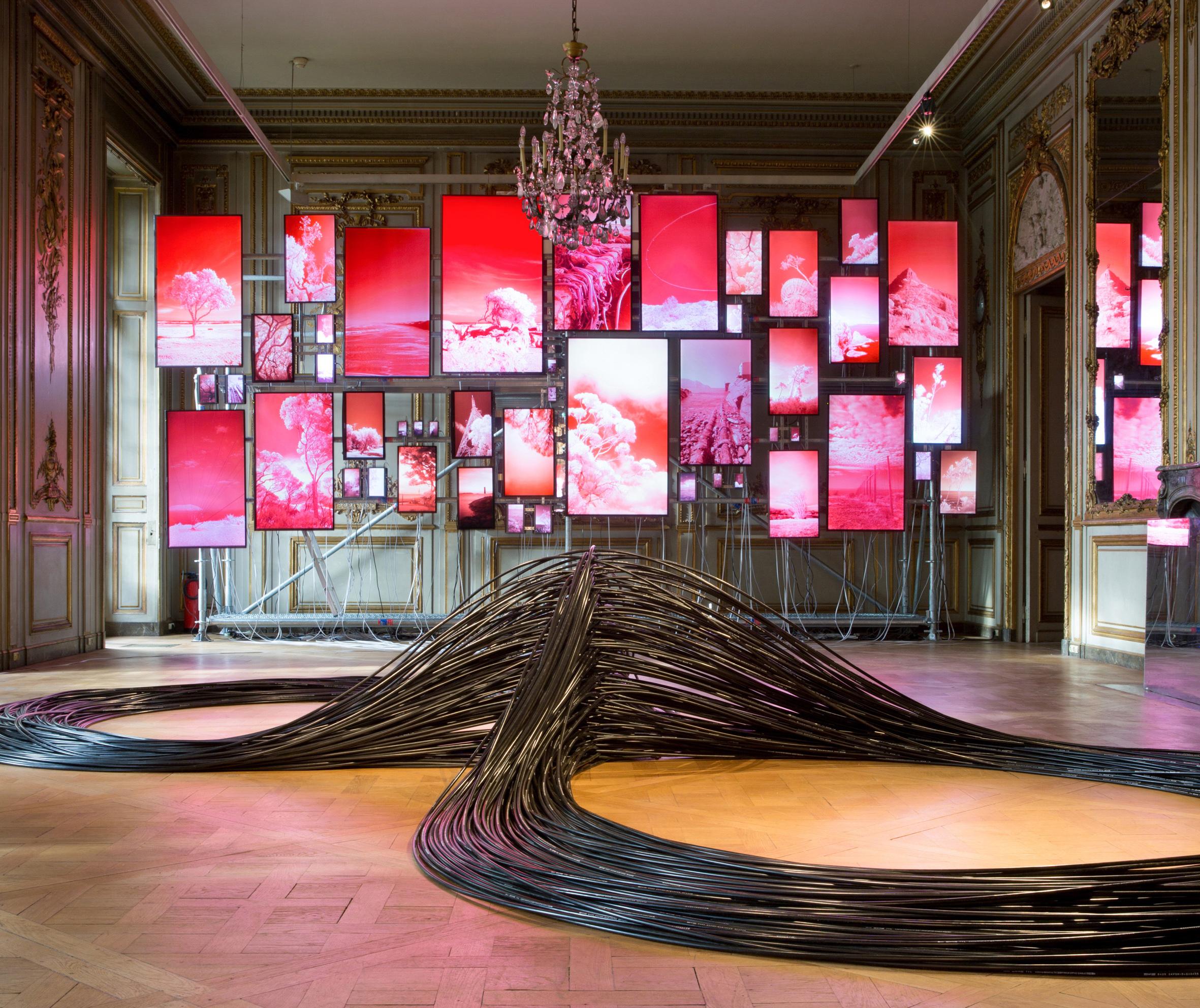
Evan Roth is an artist whose work makes the materiality of the web and its infrastructures palpable. Landscapes with a ruin, 2017
Questions remain open: what do we do with all this published content? How do we preserve it? Who decides what stays — and what disappears?
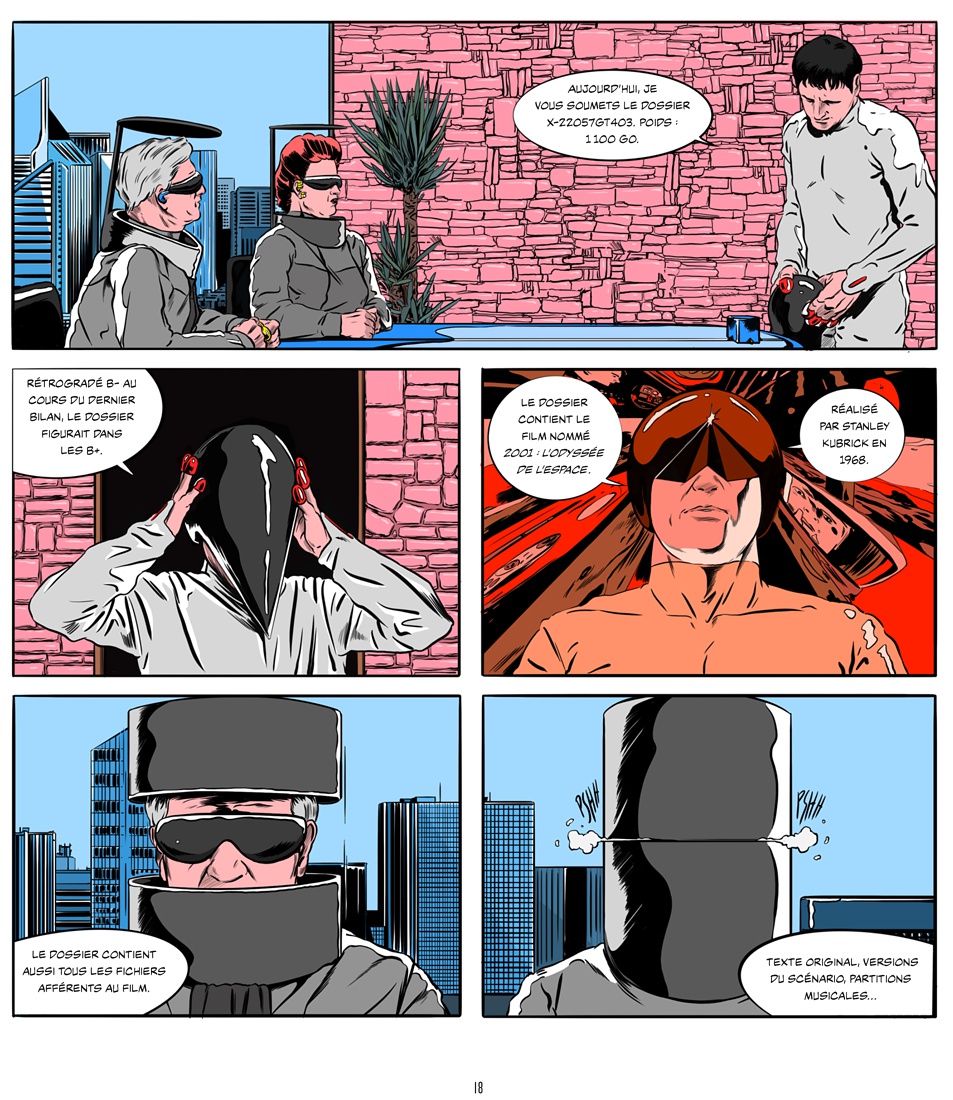
In his graphic novel Préférence Système, Ugo Bienvenu imagines a futuristic world in which data storage runs out, forcing authorities to curate what survives. Only digital works that are still widely accessed are kept, discarding all others — including, as in this excerpt, works that form part of our cultural heritage.
The web gives the illusion of unlimited memory: everything published seems as though it could remain there indefinitely. It is an illusion. Sites die, platforms close, links break, hosting providers disappear. The question of the archive — who preserves what, for whom, according to what values — is one of the most urgent political questions of the contemporary web.
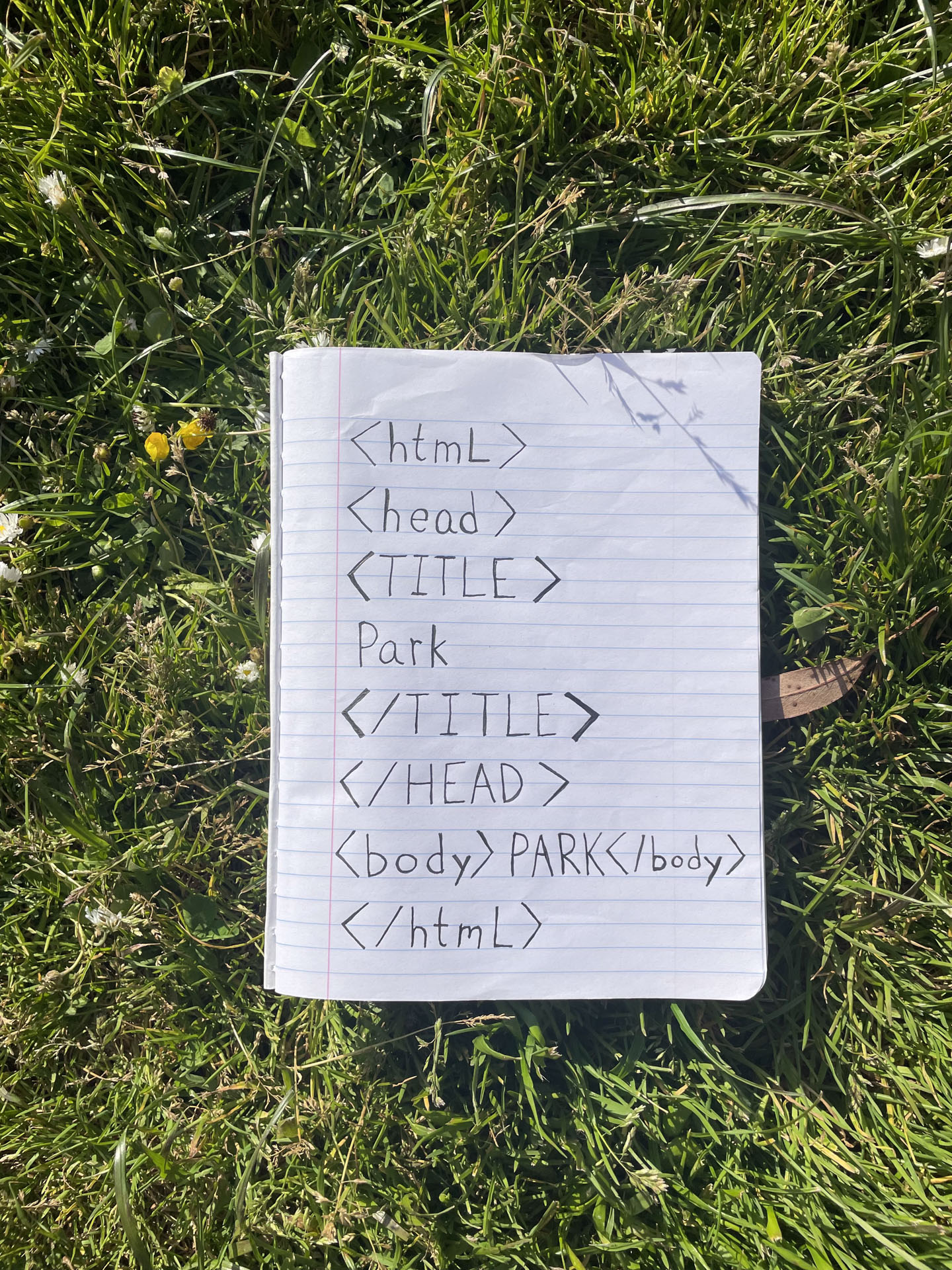
An outdoor coding workshop
Chapter 1
A Living Archive (in Decay)
Unlike a book or a film, a website only exists as long as someone — or a group — actively maintains it. It is an object whose survival depends on continuous attention.
Publishing on the web also means entering into a relationship of upkeep: paying for hosting, renewing the domain name, keeping the code current enough to remain readable by browsers. Once this upkeep stops, the page disappears — or degrades progressively.
This is a fundamental difference from analogue media: a book left in a library remains readable centuries later. A web page whose hosting is no longer paid for fades away.
Of 1.5 billion registered websites, fewer than 200 million are still active. The vast majority of URLs published since the early days of the web lead nowhere.
The phenomenon has a name: the dead link (or link rot). A Harvard Law School study (2023) found that 54% of links cited in US Supreme Court decisions no longer worked.
Chapter 2
Archiving: Preserving the Web
In the face of this structural disappearance, various actors attempt to preserve what can be preserved — with very different means, methods, and political positions.
Archive Team
Archive Team is a collective of digital archivists founded in 2009 by Jason Scott, a historian and documentarian specialising in internet culture, who describes its mission through three principles: rage, paranoia, and kleptomania. They monitor struggling online services and launch emergency collection operations before a platform shuts down.
The Archive Team homepage
The collective was born out of a sense of powerlessness. The feeling that we were letting companies decide for us what was going to survive and what was going to disappear.
Jason Scott, founder of Archive Team.
One Terabyte of Kilobyte Age
Archive Team is behind the rescue operation that made it possible for Olia Lialina and Dragan Espenschied to carry out their project One Terabyte of Kilobyte Age — an exploration and preservation of the sites produced on GeoCities before Yahoo! deleted them in 2009.
In August 2023, Skyblog shut down after more than twenty years of service. In April of the same year, the Skyblog team contacted the digital legal deposit service at the BnF (French National Library) to flag the platform’s imminent closure. The BnF launched an emergency collection operation: 12.6 million blogs — around 40 terabytes of data — joined the library’s heritage collections.
With the Skyblogs, researchers now have access to a corpus that represents a defining moment in the history of the French web.
Emmanuelle Bermès, academic director of the Digital Technologies Applied to History master’s programme at the École nationale des chartes.
Internet Archive
Founded in 1996 by Brewster Kahle in San Francisco, the Internet Archive is the largest public digital library in the world. Its mission: universal access to all human knowledge. Funded almost entirely by donations, it archives websites, books, films, music, and software — over 800 billion web pages to date.
Brewster Kahle purchased this building to house the Internet Archive because, in his words, 'it reminded us of our logo'.
Wayback Machine
Its best-known branch is the Wayback Machine (launched in 2001): a search engine into the web’s past, which lets you view snapshots of any site at any given date. It is the most widely used tool in the world for verifying what a disappeared or changed site once said.
The Wayback Machine homepage
Wayback Machine Under Threat
In October 2024, a series of cyberattacks paralysed the Internet Archive. An attack compromised the data of 31 million users and took the servers offline for several weeks, severely weakening the organisation.
In parallel, it faces multiple lawsuits for copyright infringement — notably from major US publishing groups — challenging its right to archive and lend digitised books.
Finally, in response to the rise of AI, many platforms have adopted policies restricting the indexing of their content by crawlers — including those of the Internet Archive — thereby preventing it from being properly archived.
Who Owns the Data?
Information is power. But like all power, there are those who want to keep it for themselves. The world’s entire scientific and cultural heritage, published over centuries in books and journals, is increasingly being digitized and locked up by a handful of private corporations. Want to read the papers featuring the most famous results of the sciences? You’ll need to send enormous amounts to publishers like Reed Elsevier.
Aaron Swartz, Guerilla Open Access Manifesto, 2008
UbuWeb: Archiving as Resistance
UbuWeb is an online archiving platform founded in 1996 by the poet Kenneth Goldsmith, dedicated to the avant-garde arts — experimental film, musique concrète, sound poetry, performance. It operates on a simple principle: host what no one else will host, without asking permission.
It is an openly piratical approach, justified by a political stance aimed at making available and preserving content that would otherwise disappear.
In a moment when our collective memory is being systematically eradicated, archiving reemerges as a strong form of resistance, a way of preserving crucial, subversive, and marginalized forms of expression. We encourage you to do the same. All rivers lead to the same ocean: find your form of resistance, no matter how small, and go hard. It’s now or never. Together we can prevent the annihilation of the memory of the world.
Message accompanying the reactivation of the site in 2025 — after a year of inactivity — for political reasons.
By the time you read this, UbuWeb may be gone. Not designed to be a permanent archive, Ubu could disappear for any number of reasons: our Internet service provider could pull the plug, we could be threatened with a lawsuit, or we could simply get tired of it. […] We don’t run on the most stable servers or the fastest machines; crashes regularly eat away at the archives; sometimes the entire site is down for days; and most often the already too-small pool of volunteers shrinks to one. But that’s the beauty of it: UbuWeb is fiercely anti-institutional, supremely fluid, refusing to meet any demands except those that suit us at any given moment, which gives us tremendous flexibility and the ability to continually surprise ourselves.
Extract from the site’s ‘About’ page.
This is the whole stakes of these practices, which question the fragility of our digital presence — fragile in the face of platforms that shape how we express ourselves while dispossessing us of the content we publish there, and fragile in the face of the physical infrastructures that cannot guarantee the permanence of what we share.
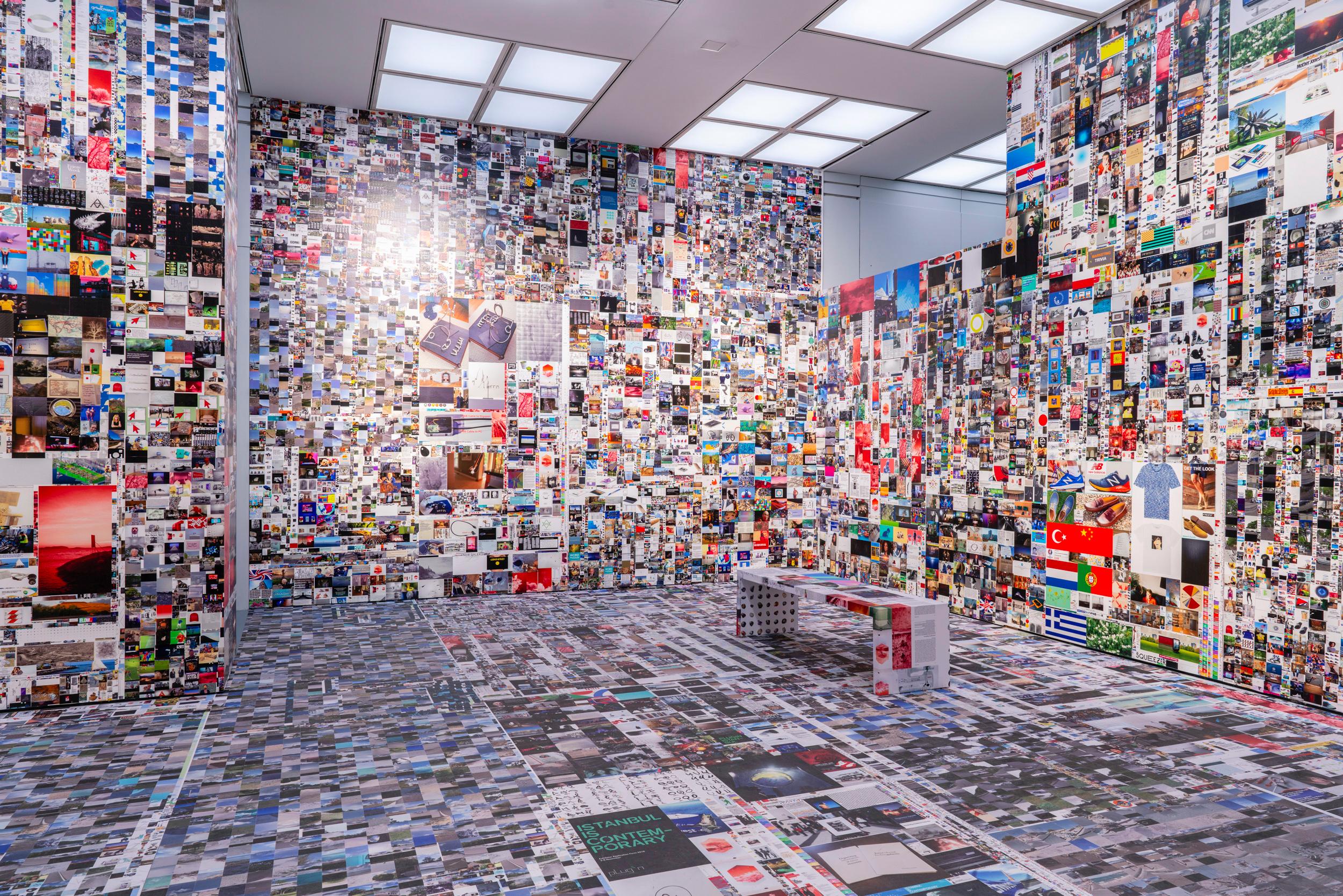
Evan Roth, Since you were born, 2019
Chapter 3
Making the Digital Experience Tangible
Beyond archiving what has already disappeared, we must also think differently about our relationship to what we publish now — reclaiming the infrastructure, anchoring data in a place, caring for the margins of digital space.
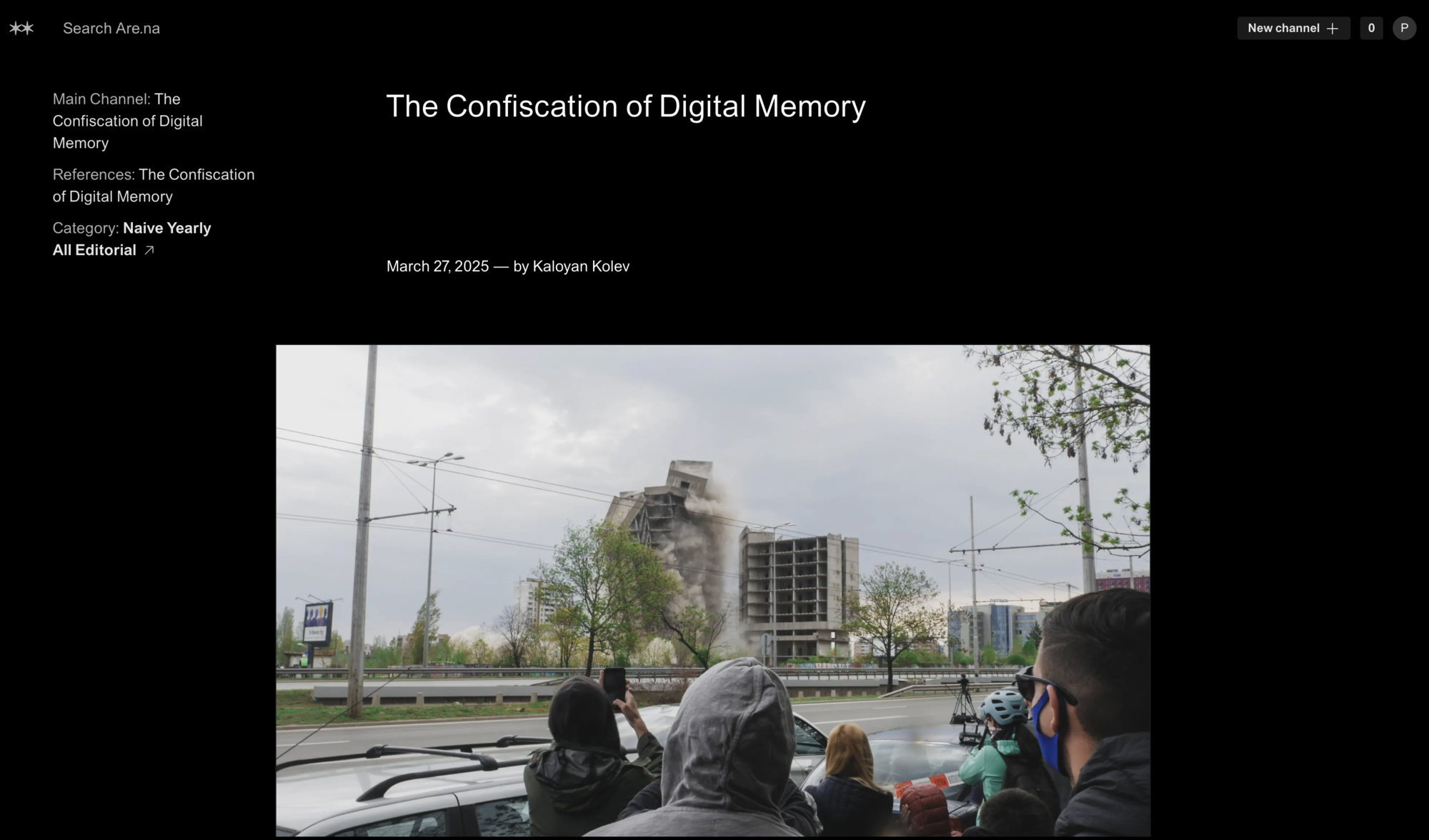
The Confiscation of Digital Memory
On the night of 15 January 2024, Vbox7 — the Bulgarian video platform emblematic of a local web culture — made more than 10 million videos private at once, without warning. It may be one of the greatest losses in terms of digital culture in Bulgarian history.
This event demonstrates that the content we publish on platforms does not belong to us: platforms confiscate a shared cultural memory by unilaterally deciding what deserves to exist.
In 2012, @taia777 posted an enigmatic video on YouTube. It quickly went viral for an unexpected reason: in the comments, thousands of people began leaving messages following the same pattern. Each one started with “checkpoint:”, followed by a short text describing an emotional state or significant moment the user had just lived through.
Together, these created a sensitive and heterogeneous portrait of a digital community sharing common references. Traces of lives left at the turn of a fleeting passage.
Checkpoint refers to save points in video games.
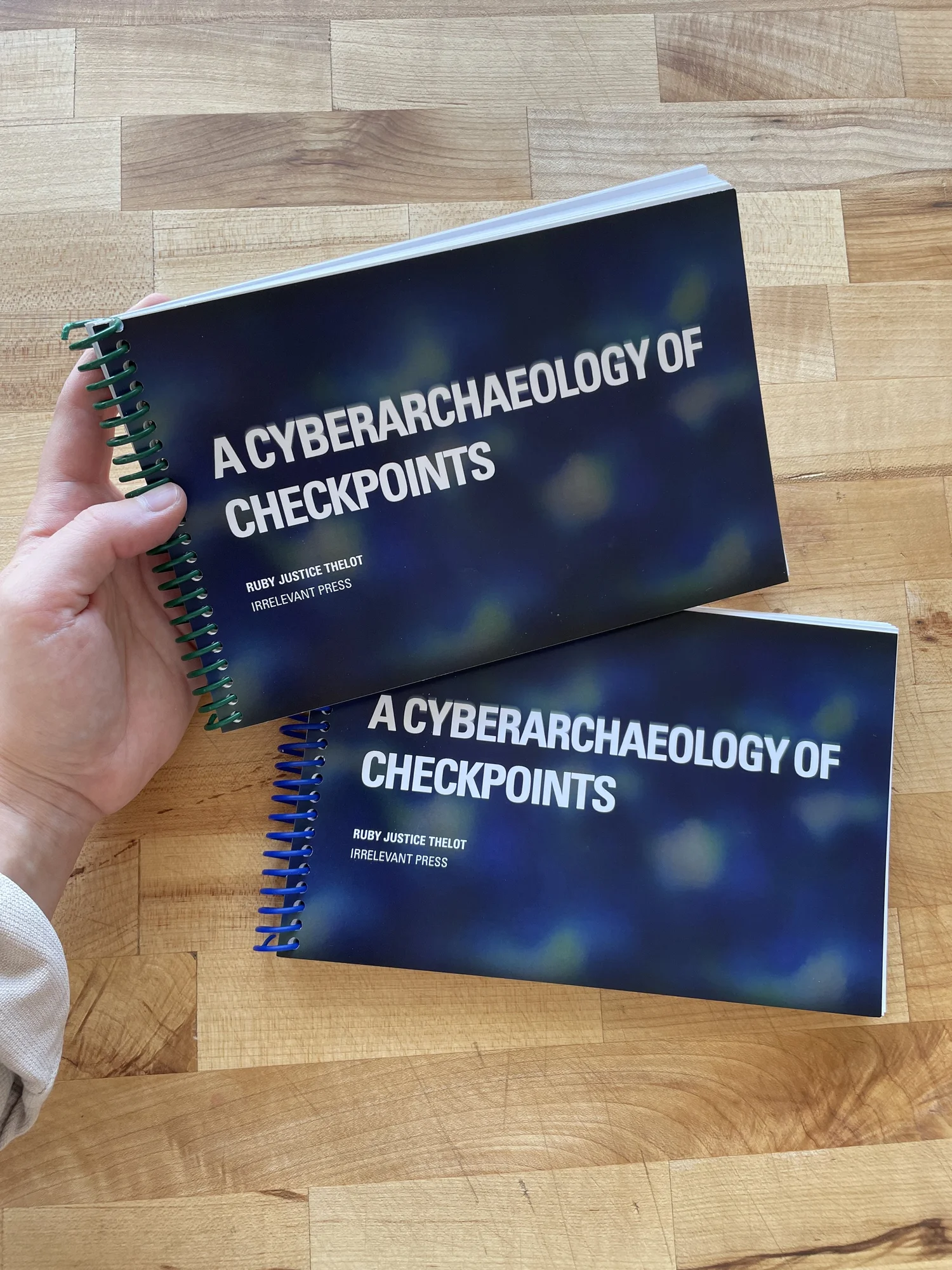
A Cyberarchaeology of Checkpoints
YouTube deleted the video in 2021 for copyright infringement, erasing thousands of messages with it.
The user @rebane2001 had saved everything on her own initiative: that video, its comments, and over a million others, onto her own hard drives.
In her book A Cyberarchaeology of Checkpoints, Ruby Justice Thelot concludes: “The history of the Checkpoints reminds us that online communities rest on an infrastructure we do not control.”
Ruby Justice Thelot, A Cyberarcheology of Checkpoints, 2024
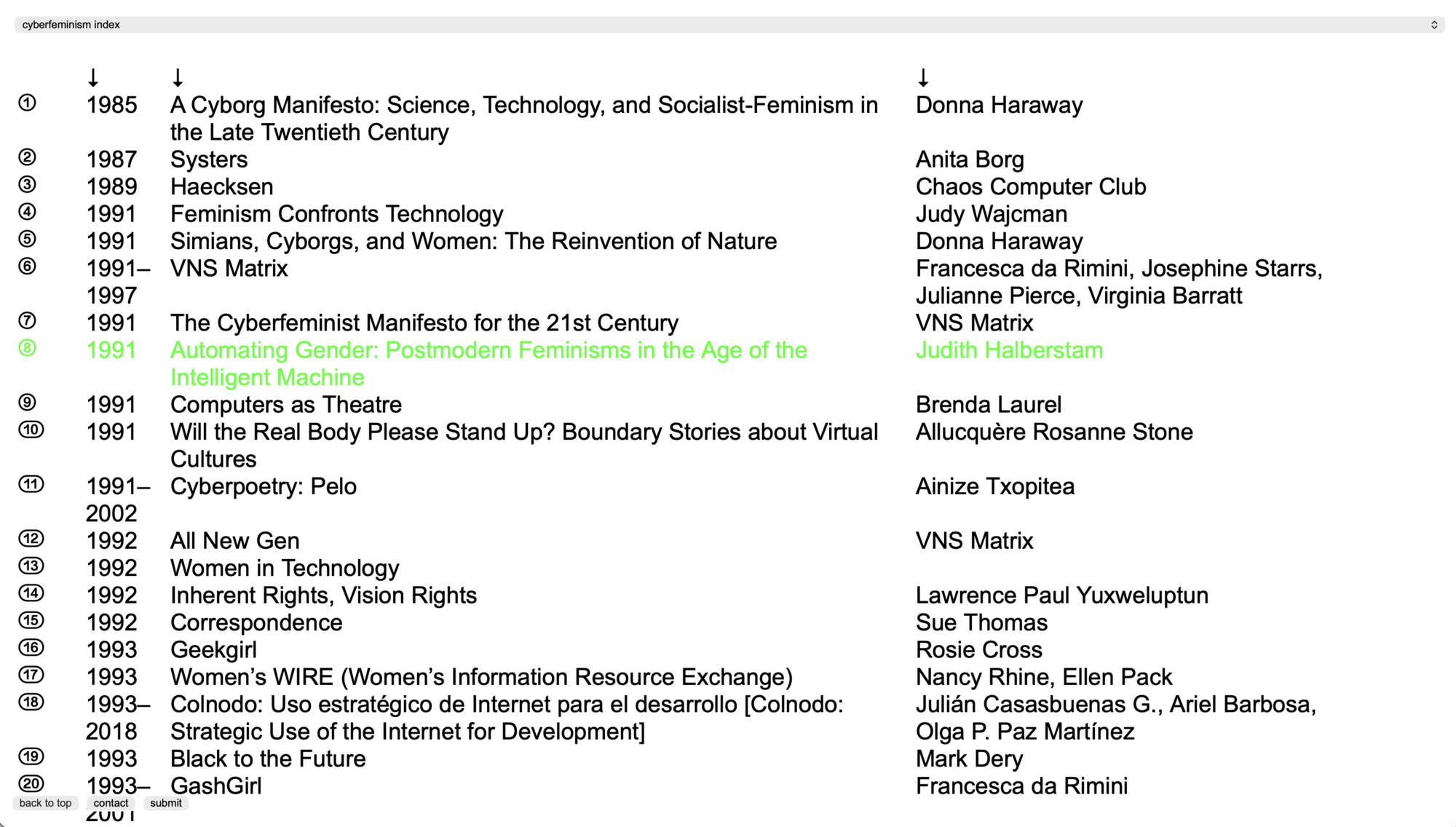
Cyberfeminism Index
Launched in 2020 by Mindy Seu, the Cyberfeminism Index is a collaborative database cataloguing over 700 projects, texts, and works related to cyberfeminism from the 1990s to the present. It gives visibility to a structuring movement in the history of the web — one largely ignored by dominant narratives because of the gender of its protagonists. It reaffirms the political role of the web, of collecting, of editing content, and of making it available.
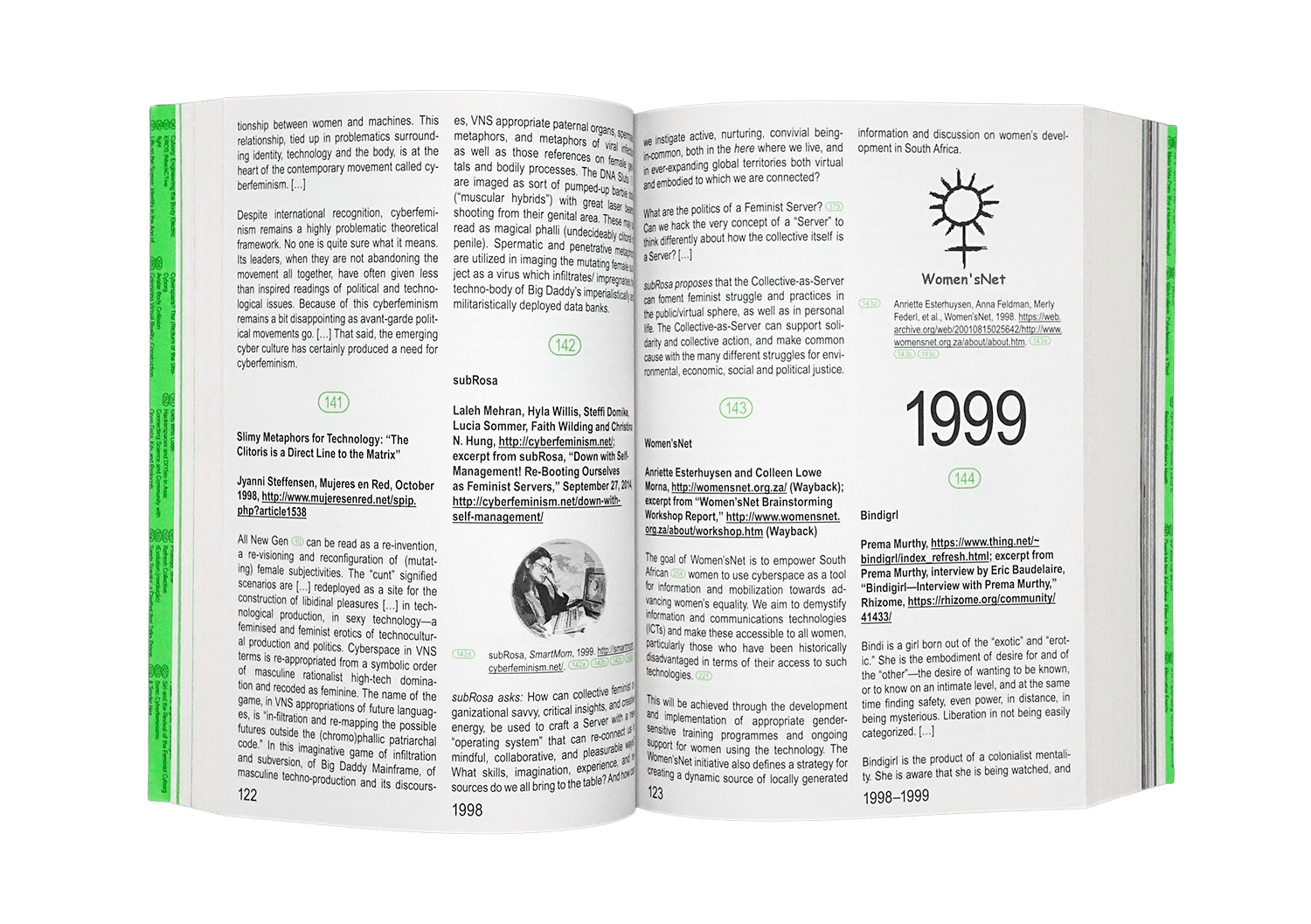
In 2022, the digital project gave rise to a print publication, capturing the collection at a given moment. Inherently incomplete — in the face of an ever-growing archive — the printed book preserves the collection while offering a renewed reading of it.
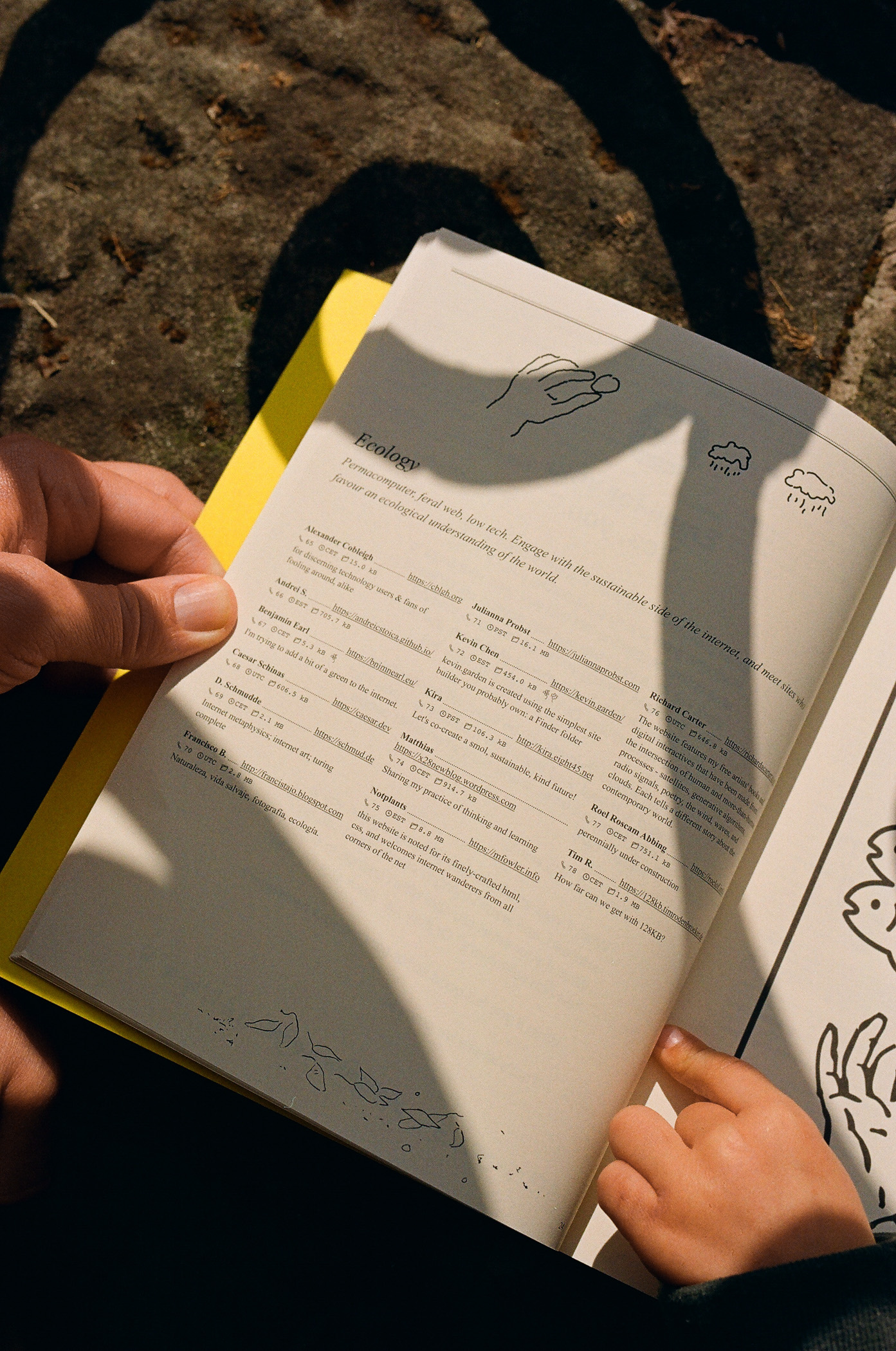
An annual publication, designed by Elliott Cost and Kristoffer Tjalve, which since 2025 has been exploring the poetic web, publishing essays and sharing a directory of personal sites belonging to hundreds of designers, developers, writers, curators, and educators.
Elliott Cost and Kristoffer Tjalve, Internet Phone Book, self-published, 2025
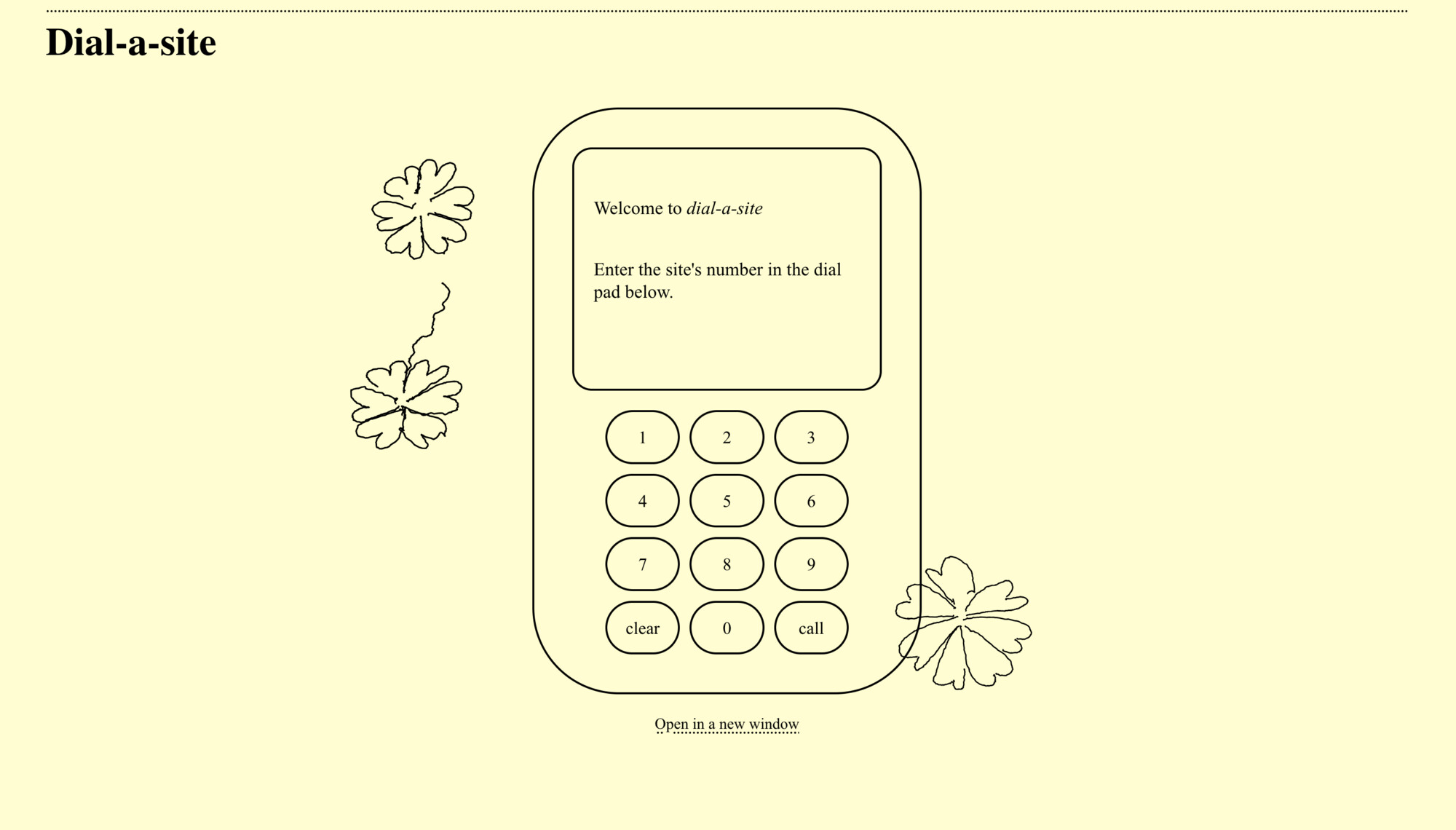
The site offers an original interface for navigating the directory. Rather than a search bar, you dial the number of a site to access it; the digital space articulates with the printed object, which serves as a compass through the accumulated content.
These projects invite us to question the materiality of the web and the information stored within it. By proposing different forms of access and sharing, they make the digital experience tangible.
Elliott Cost and Kristoffer Tjalve, Internet Phone Book, self-published, 2025. Interior spread
Making Servers Visible
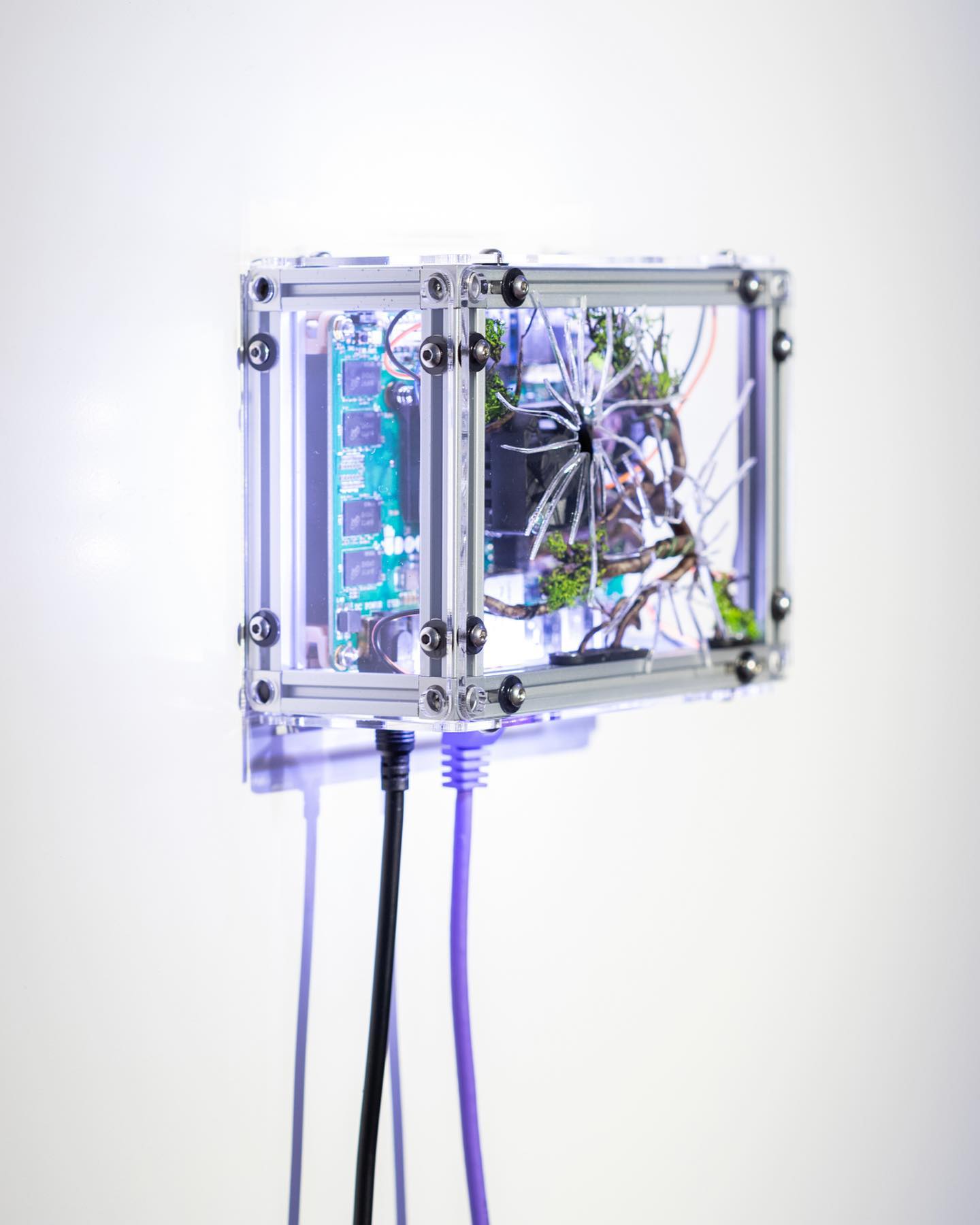
In a similar vein, Lukas Engelhardt conceives the servers — which will host his digital projects — as fully sculptural forms that participate in a shared narrative.
A hand-built server by Lukas Engelhardt. Following the logic of permacomputing, artists and makers build their own infrastructure rather than renting remote servers.
Cyberdecks: Claiming Independence
Cyberdecks are hand-built portable computers, often assembled from salvaged parts, inspired by science-fiction terminals. The practice asserts a stance of autonomy in constructing one’s digital existence and identity.
A hand-built cyberdeck. The r/cyberdeck community catalogues hundreds of similar projects.
All of these projects share a commitment to a situated experience of the web. Conscious of the physical dimension it represents, the web is no longer the intangible cyberspace of its early years — it is now anchored in a real geography.
The Robida Collective runs situated practice workshops: coding a website tied to a specific place, anchoring the digital in a real geography.
A site-specific web project made during the Coding in situ workshop
Alt Text as Poetry
The alt attribute is the HTML attribute that describes an image for people who cannot see it — screen readers, unloaded images, indexing engines. In practice, it is most often rushed, empty, or auto-generated.
Alt Text as Poetry is a project by Bojana Coklyat and Shannon Finnegan that inverts this constraint: what if alt text were a fully-fledged writing space, as carefully crafted as the image it describes? Their site offers exercises, examples, and a reflection on what it means to describe an image for someone who cannot see it.
A screenshot of me being very impressed by my nephew
Harry’s new hat. The hat is a plastic green roof taken from
a doll’s house.
A legitimate concern exists in digital practice in response to the rise of Artificial Intelligence and its mass adoption.
These examples make one thing clear: the web is not just code. Code is simply a language that sets in motion dynamics of sharing — and AI is incapable of imagining new ones.
Approaching code collectively or poetically are not peripheral practices — they have been at the heart of the web since its beginnings. Don't forget to take a selfie with your herbs
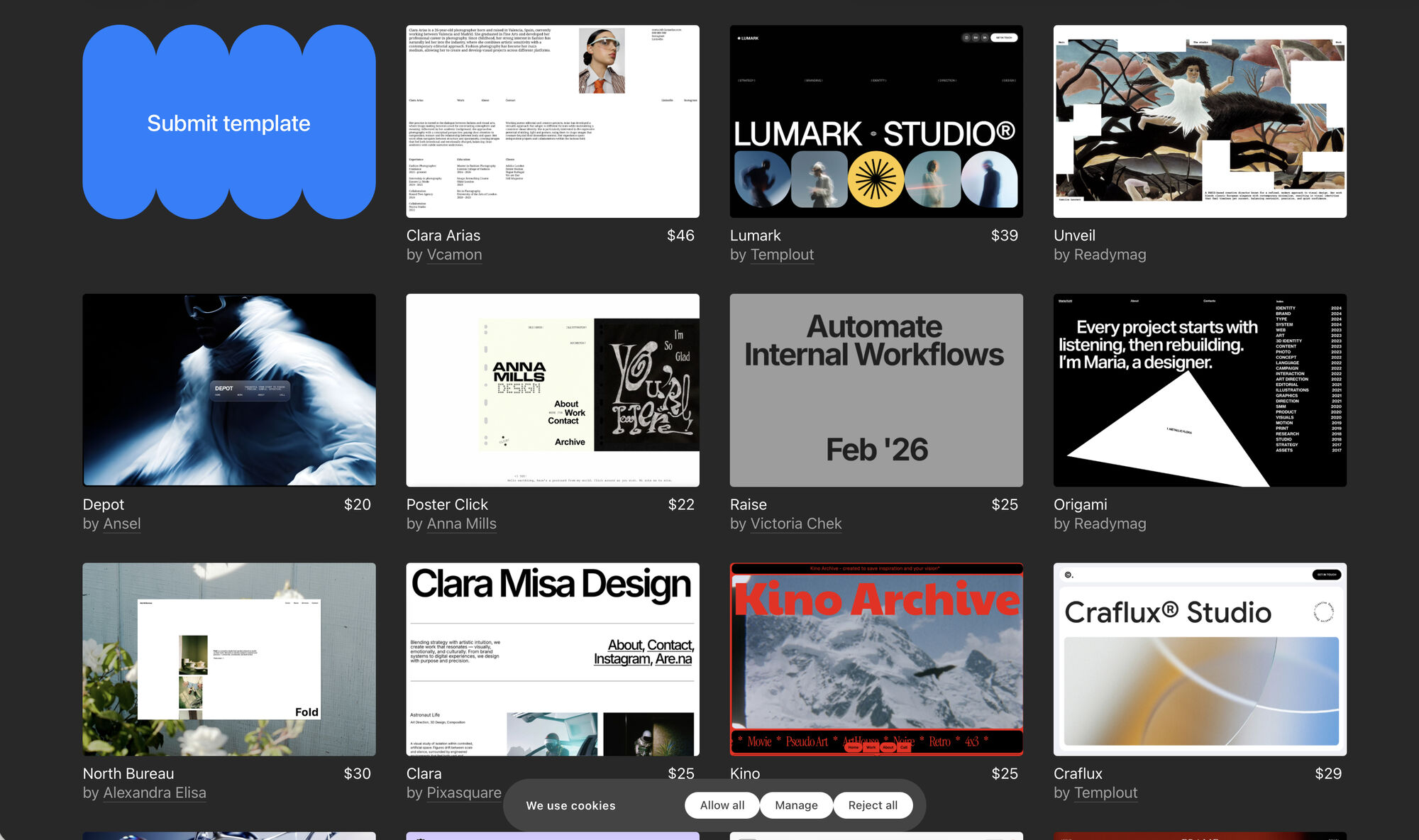
AI draws on our expectations to generate its responses. It simply extends a logic of standardisation that has existed since the 2000s — with component libraries, frameworks, templates, and design systems.
A template listing on the Readymag website
Conclusion
These practices demonstrate that the web is sensitive and fragile. It is an important site of power dynamics — but it is vast enough for all forms of expression to unfold within it.
As designers, translators, mediators of form — for whom the question of address is central — the web offers a vast terrain for reflection and experimentation.